WiFi smoke detector
WiFi smoke detector was recalled on 16 July 2021 under EU Safety Gate alert A12/01037/21. Asphyxiation, Burns, Fire risk reported by France. The smoke detector does not have sufficient sensitivity.
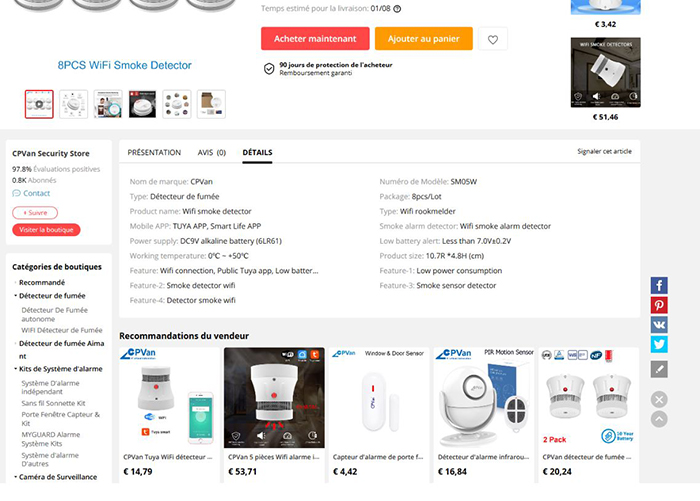
| Alert Number | A12/01037/21 |
| Brand | CP Van |
| Category | Construction products |
| Risk Type | Asphyxiation, Burns, Fire |
| Notifying Country | France |
| Country of Origin | People's Republic of China |
| Model Number | SM05W |
| Published | 16 July 2021 |
Risk Description
The smoke detector does not have sufficient sensitivity. Furthermore, its sound power is too low (measured values: as low as 80 dB). As a result, it cannot perform its function, hence letting fire to develop; if a fire breaks out, the product may fail to generate an alarm signal, causing a risk of asphyxiation and burns to the occupants of the building. The product does not comply with the Construction Products Regulation and with the relevant European standard EN 14604.
Measures Taken
Type of economic operator to whom the measure(s) were ordered: ManufacturerCategory of measure(s): Recall of the product from end usersDate of entry into force: UnknownType of economic operator to whom the measure(s) were ordered: ManufacturerCategory of measure(s): Withdrawal of the product from the marketDate of entry into force: UnknownType of economic operator to whom the measure(s) were ordered: DistributorCategory of measure(s): Removal of this product listing by the online marketplaceDate of entry into force: Unknown
Product Description
Self-contained smoke detector/alarm for household use. The product was sold online, in particular on AliExpress, without CE marking.
🛑 🌡️ 🔥 What Should You Do?
This recall involves a asphyxiation, burns, fire hazard related to WiFi smoke detector.
About this risk
Asphyxiation: This product can block the airways or restrict breathing, posing a risk of asphyxiation. Burns: This product can cause burns due to overheating, faulty insulation, or flammable materials that ignite during use. Fire: This product poses a fire risk due to overheating, faulty components, or flammable materials that do not meet safety standards.
Recommended action
Asphyxiation: Remove the product from the environment immediately, especially from sleeping areas. If someone is having difficulty breathing, call emergency services immediately. Burns: Stop using the product immediately. If you have suffered burns, cool the area with running water and seek medical attention. Do not attempt to repair the product. Fire: Disconnect the product from any power source and stop using it immediately. Do not leave it unattended. Store it away from flammable materials. Contact the retailer for a refund.
Who is at risk?
Infants and young children are at the highest risk. All users. Children and elderly people are particularly vulnerable to burn injuries. All household members. Fire risks are especially dangerous for sleeping areas and children's rooms.