Children’s sweatshirt
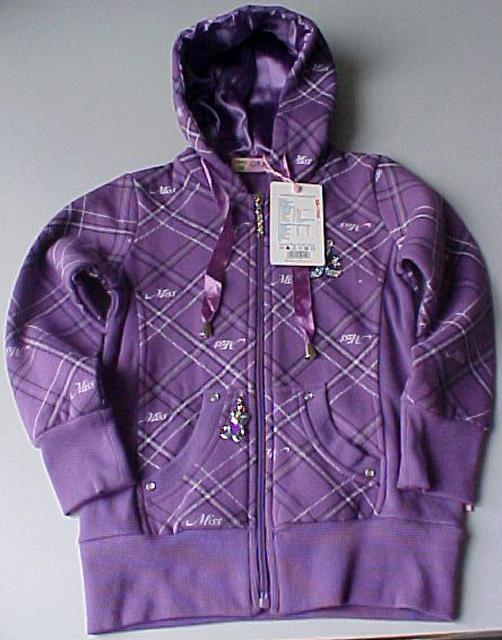
Children’s sweatshirt was recalled on 20 August 2010 under EU Safety Gate alert 1262/10. Choking, Strangulation risk reported by Hungary. The products pose a risk of strangulation and choking due to the use of toggles, drawstrings and cords in the hood.
| Alert Number | 1262/10 |
| Brand | Grace |
| Category | Clothing, textiles and fashion items |
| Risk Type | Choking, Strangulation |
| Notifying Country | Hungary |
| Country of Origin | People's Republic of China |
| Barcode | 59990115911172. bar code: 5999011548203 |
| Model Number | 1. WT 9111 |
| Published | 20 August 2010 |
Risk Description
The products pose a risk of strangulation and choking due to the use of toggles, drawstrings and cords in the hood. Furthermore, for the first product, the small decorative elements can be easily removed and due to their size could be inhaled or ingested.The products do not comply with the relevant European standard EN 14682.
Measures Taken
Type of economic operator to whom the measure(s) were ordered: OtherCategory of measure(s): Withdrawal from the market and recall from consumers ordered by the authorities.Date of entry into force: Unknown
Product Description
1. Sweatshirt with checked pattern for children. The hood includes a cord with metal toggles on the ends. The pocket and the front are decorated with tiny rhinestones. Size: 98.2. Children’s sweatshirt with hood and zip-fastener. The hood includes a drawstring with plastic toggles on the ends. Inscription on the front: "French kisses". Size: 104/110.
🛑 🚫 What Should You Do?
This recall involves a choking, strangulation hazard related to Children’s sweatshirt.
About this risk
Choking: This product contains small parts that can detach and pose a choking hazard, or its size and shape make it dangerous for young children if swallowed or placed in the mouth. Strangulation: This product contains cords, strings, loops, or other elements that can wrap around a child's neck and cause strangulation.
Recommended action
Choking: Remove the product from children immediately. Check if any small parts are missing. If a child has swallowed a part, seek medical attention immediately. Return the product to the retailer. Strangulation: Remove the product from the child's environment immediately. Cut any cords or strings if they cannot be safely removed. Never leave children unsupervised with products that have loose cords.
Who is at risk?
Children under 3 years old are at highest risk. Supervise older children as well. Infants and young children are at the highest risk of strangulation from cords, strings, and loops.